From the first train up to Gornergrat to the last light on the Matterhorn — how to make every hour count in Switzerland's most iconic alpine village.
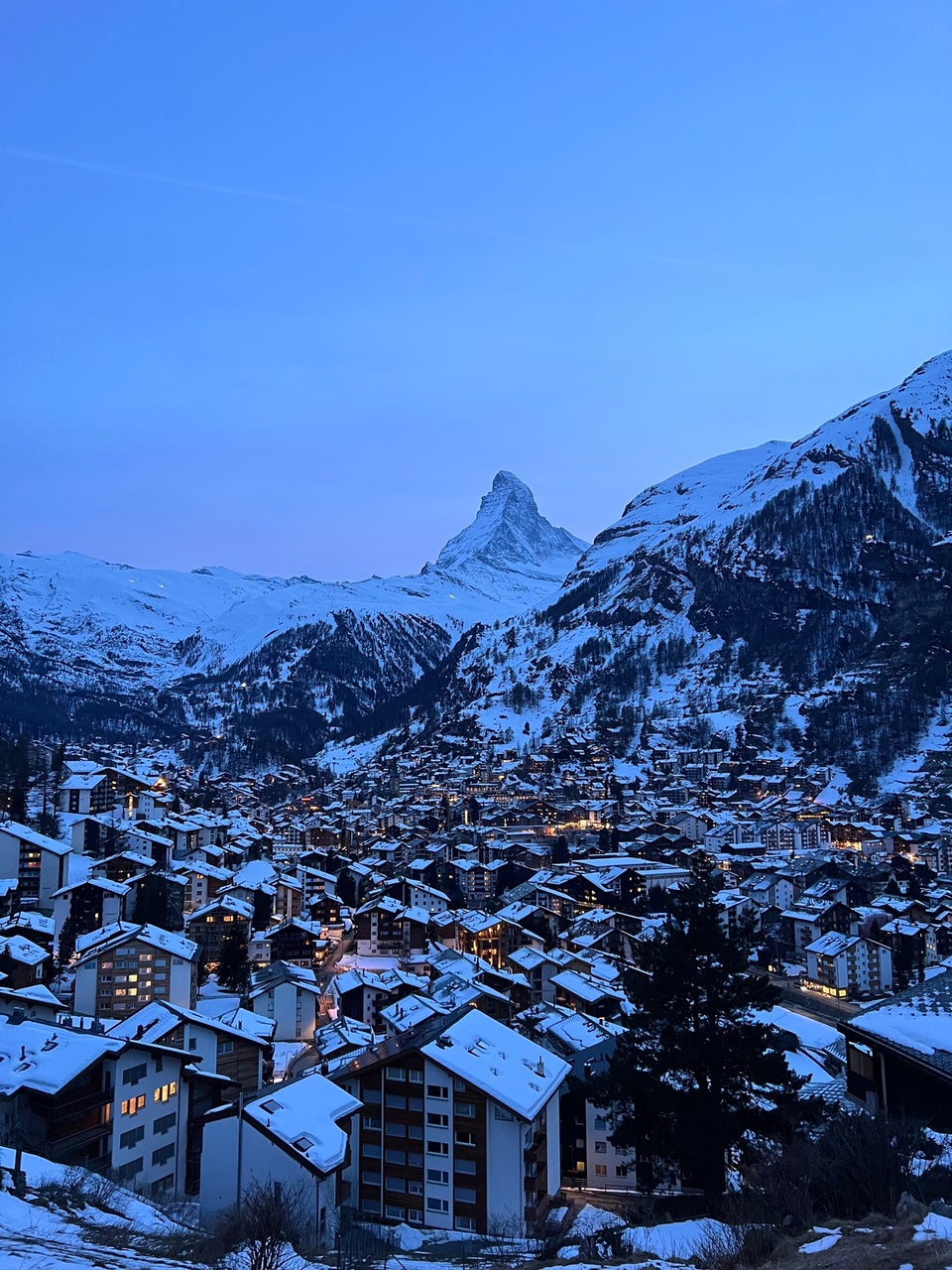
Zermatt is car-free, compact, and built around a single overwhelming fact: the Matterhorn is right there. At 4,478 metres, the pyramid-shaped peak dominates the southern skyline from almost every street in the village. One day is not enough to explore everything — but it is enough to understand why people return year after year.
This itinerary is designed for a visitor arriving by train in the morning and leaving in the late afternoon or evening. It prioritises the experiences that genuinely require being in Zermatt — the views you cannot get anywhere else, the train up to Gornergrat, the Five Lakes Walk if conditions allow. It avoids the things that fill time without adding much.

Zermatt is accessible only by train. The nearest road terminus is Täsch, 5 km down the valley — cars are left there and visitors continue by the Matterhorn Gotthard Bahn shuttle (runs every 20 minutes, journey time 12 minutes). From Visp or Brig, the main SBB line connects directly to Zermatt in around 1.5 hours. From Zurich, the total journey is approximately 3.5 hours with one change at Visp; from Geneva, about 3 hours via Visp or Sion.
Arriving early matters. The Matterhorn is frequently clear in the morning and clouds over by midday in summer — a pattern reliable enough that most photographers position themselves before 09:00. The Gornergrat Railway fills up quickly on summer mornings; arriving by 08:00 puts you ahead of the main wave of day-trippers from Zurich and Geneva.

The Gornergrat Railway departs from directly outside the main train station. It is the highest open-air cog railway in Europe, climbing 1,500 metres over 9 km to the Gornergrat summit at 3,089 metres. The journey takes 33 minutes and passes through forests, pastures, and then bare alpine terrain above the treeline.
At the top, the view is extraordinary: the Gorner Glacier spreads below — one of the largest glacial systems in the Alps — and the panorama includes 29 four-thousand-metre peaks, among them Monte Rosa (4,634 m, the highest point in Switzerland) and the Matterhorn seen from a different angle than the village below. The summit hotel and observatory have a terrace restaurant; a coffee at 3,089 metres while watching the glacier catch the morning light is a reasonable way to spend 30 minutes.

Allow 2 to 2.5 hours for the return Gornergrat experience: 33 minutes up, 45–60 minutes on top, 33 minutes down. The train runs every 24 minutes.

Guided tours of Zermatt include Gornergrat trips, ski passes, snowshoe excursions, and day trips from Zurich or Geneva — with free cancellation on most options.
Browse Zermatt Experiences →Back in the village, Zermatt's Bahnhofstrasse — the main pedestrian street running from the station south toward the mountains — gives the clearest view of the Matterhorn from ground level. The street is lined with hotels, restaurants, and shops; the Matterhorn appears at the far end like a vanishing point.
The Hinterdorf (old village) is the part of Zermatt that predates the tourist era — a cluster of traditional timber mazots (elevated grain stores on stilts) and chalets on the eastern side of the village. It is a 10-minute walk from the station and gives a sense of what the village looked like before the first English climbers arrived in the 1850s.
Zermatt has a churchyard worth five minutes of attention: the graves of mountaineers who died on the peaks above are a quiet history of alpine climbing from the Victorian era to the present. The Matterhorn alone has claimed over 500 lives since the first ascent in 1865.

Zermatt is expensive — more so than most Swiss towns because everything arrives by train and the clientele skews toward international luxury tourism. A sit-down lunch at a mid-range restaurant will cost CHF 25–40 per person. More budget-conscious options include takeaway from the bakeries near the station or a supermarket picnic eaten with a Matterhorn view.
Two mountain restaurants stand out for a proper sit-down lunch with exceptional views:
Chez Vrony at Findeln (2,000 m) is one of the most photographed restaurants in Switzerland — a traditional chalet with a south-facing terrace looking directly at the Matterhorn. The menu focuses on Swiss classics: rösti, raclette, and seasonal specialities. Book well in advance in summer; walk-ins are rarely possible.


The Findlerhof, a short walk from Chez Vrony at the same altitude, is consistently rated among the best mountain restaurants in Switzerland — more formal in atmosphere, with a wine list that matches the setting. Both require advance booking in season and are accessible via the Sunnegga funicular followed by a 20-minute walk.

The Fünf-Seen-Wanderung (Five Lakes Walk) is the most celebrated hike in the Zermatt area — a 9.5 km circuit at altitude that passes five mountain lakes, each reflecting the Matterhorn in clear conditions. The walk takes 3 to 4 hours at a relaxed pace.
The standard approach is to take the Sunnegga funicular up to Sunnegga (2,288 m) and then continue on foot via Stellisee, Grindjisee, Grünsee, Moosjisee, and Leisee before descending back to Sunnegga. The Stellisee is the most photographed — a still lake at 2,537 metres where the Matterhorn's reflection appears on windless mornings. From Leisee, a further gondola descent returns to the valley.
The walk is rated easy to moderate. It is open roughly from late June through October, depending on snowmelt. In spring or after overnight snow, check conditions before departing. The full circuit starting at 14:00 gives enough time to complete the walk and return to the village before the last trains of the evening.

The Matterhorn faces northwest on its most photographed side. In the late afternoon, as the sun drops toward the western ridgeline, the light catches the peak directly — turning the grey granite orange and then deep red in the hour before sunset. This is the alpenglow (Alpenglühen), and it is worth staying for if your train permits.
The best ground-level position is the small bridge over the Vispa river at the southern end of the village — clear sightline to the Matterhorn, no buildings in the foreground, accessible on foot in 10 minutes from the station. Arrive 30 minutes before local sunset and wait.


From guided Matterhorn viewpoint tours to ski passes and snowshoe walks — browse curated Zermatt experiences with free cancellation and instant confirmation.
View Zermatt Experiences →